OnePlus 13: top-tier hardware, amazing battery, but the selfie camera and software need work
Released 2025 · 20 sources analyzed
AInalyzer Score Breakdown
Sub-scores are derived from the source analysis below. See our scoring methodology.
The Snapdragon 8 Elite platform delivers top-tier performance, easily handling heavy multitasking and gaming.
It offers premium specs like the 6,000 mAh battery and 100W charging at a competitive price point.
Some users report inconsistent battery optimization and notification delays, affecting daily use.
The hardware largely lives up to expectations, but software polish and camera consistency don't quite match the marketing.
OnePlus 13: Performance and Power
The OnePlus 13, released in 2025, is a high-performance smartphone designed to compete with leading flagships. It targets power users and gamers who prioritize speed, battery life, and rapid charging, offering a compelling value proposition with top-tier specifications. While its hardware package is nearly flawless, the software experience shows some ColorOS influence, and the selfie camera is merely average.
Should you buy it? Depends who you are.
A flat yes/no/maybe by buyer profile, instead of one universal verdict.
- Power user who prioritizes speed and battery✓Yes
The Snapdragon 8 Elite and 6,000 mAh battery are ideal for heavy use.
- Content creator focused on vlogging and selfies✕No
The front camera lacks autofocus and struggles with detail, which isn't suitable for high-quality self-portraits.
- User on AT&T in the US?Maybe
Connectivity limitations like disabled Wi-Fi calling and missing mmWave 5G support are a concern.
- Someone who wants a pure Android experience✕No
OxygenOS 15 has bloatware and feels less clean than Pixel UI.
OnePlus 13
Summary
The OnePlus 13 is a performance powerhouse that successfully challenges the dominant flagships of 2025 and 2026 with its superior Snapdragon 8 Elite implementation and massive 6,000 mAh battery. It offers an incredible value proposition by providing top-tier specs like 100W charging and a 4,500-nit display at a price point that often undercuts Samsung and Apple. While the software has some 'ColorOS' influence and the selfie camera is merely average, the overall hardware package is nearly flawless. It is an ideal choice for power users and gamers who prioritize speed, battery longevity, and rapid charging above all else.
Pros
- The Snapdragon 8 Elite platform delivers industry-leading performance with clock speeds up to 4.32GHz, consistently outperforming the Samsung S24 and Pixel 9 Pro XL in CPU benchmarks. This raw power ensures the device remains future-proof for several years and handles intensive multitasking without any perceptible lag.
- The 6,000 mAh silicon-carbon battery is a massive upgrade over industry standards, providing genuine two-day battery life for moderate users and easily surviving a full day of heavy usage. This high-density battery technology allows for a larger capacity without significantly increasing the phone's physical footprint.
- Charging speeds remain best-in-class with 100W wired SUPERVOOC and 50W AIRVOOC wireless support, allowing for a full charge in under 30 minutes. This eliminates the need for overnight charging, as a quick 10-minute top-up provides enough power for several hours of use.
- The 6.82-inch LTPO AMOLED display is one of the brightest on the market, featuring a peak brightness of 4,500 nits and a 1-120Hz dynamic refresh rate. This ensures perfect visibility even under direct sunlight while maintaining color accuracy and smoothness for media consumption.
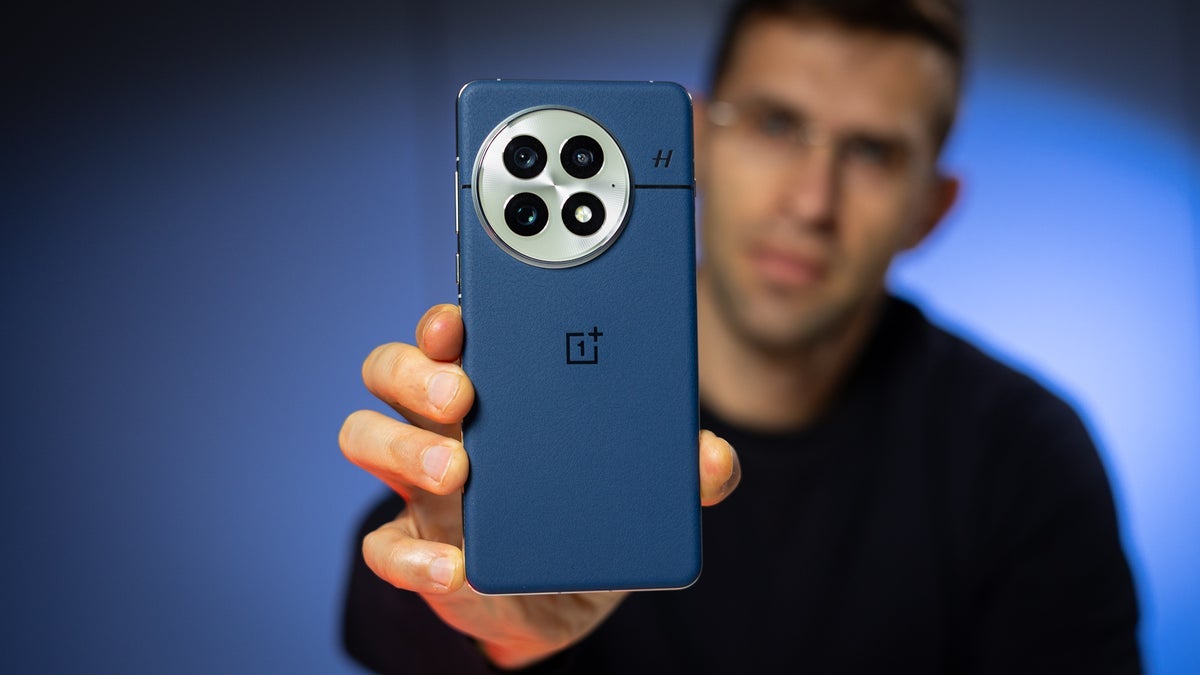
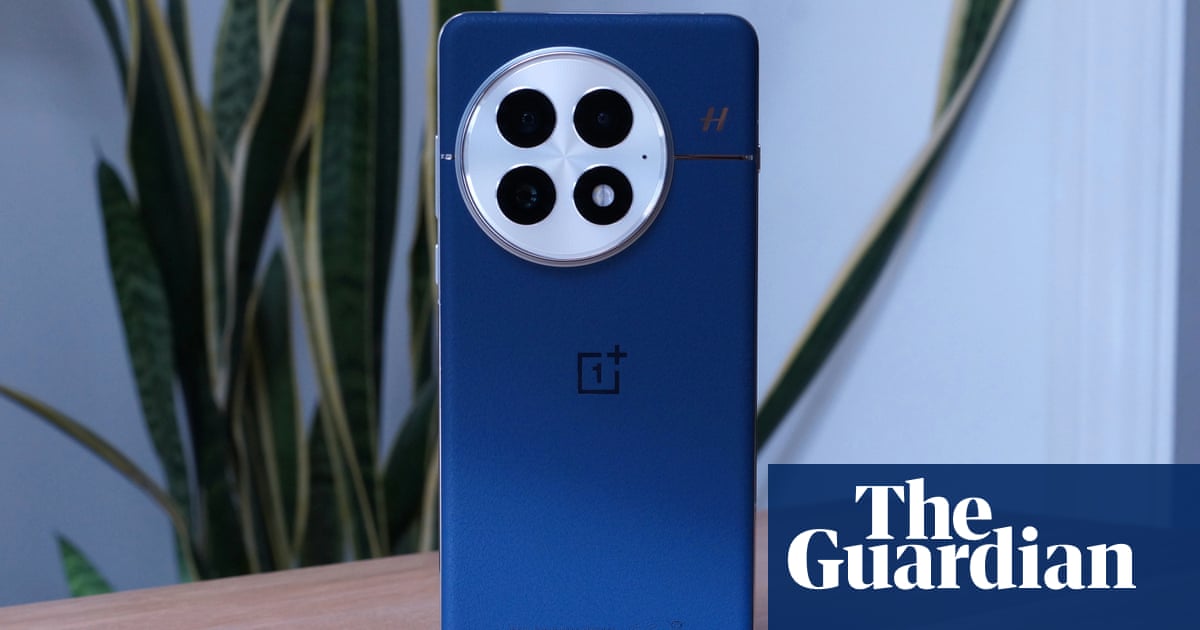
- The transition to a flat display design with ultra-thin bezels significantly improves usability by eliminating accidental edge touches and making screen protector application much easier. This design choice, combined with the premium microfibre back options, gives the device a modern and ergonomic feel.
Cons
- While the rear cameras are excellent, the front-facing selfie camera lacks autofocus and can produce underwhelming detail in challenging lighting. This is a notable omission for a 2025 flagship, especially for users who frequently record vlogs or take high-quality self-portraits.
- OxygenOS 15 has faced criticism for its increasing similarity to ColorOS, losing some of the 'clean' identity that originally defined the brand. The inclusion of pre-installed bloatware and inconsistent AI search integration can make the software experience feel less polished than Google's Pixel UI or Samsung's One UI.
- The software update policy of four years of OS updates and six years of security patches, while good, falls short of the seven-year commitments offered by Google and Samsung. This may impact the long-term resale value and software longevity for users who plan to keep their devices for more than half a decade.
Common Issues Reported




Sources
Where reviewers don't agree
Specific points where independent reviewers reached different conclusions.
Software longevity
Supportive viewFour years of OS and six years of security updates are good, especially for a non-Pixel or Samsung phone.
Critical viewGoogle and Samsung offer seven years of updates; the OnePlus 13 falls short, impacting long-term value.
Where this lands: It's good enough for most, but not for those who keep phones for over five years.
What reviewers actually say
Themes synthesised across 20 sources — agreement % shows how aligned reviewers were on each point.
- Battery lifePositive95%
The 6,000 mAh silicon-carbon battery provides genuine two-day usage for many and easily lasts a full heavy day.
- Charging speedPositive98%
100W wired and 50W wireless charging speeds are best-in-class, fully charging the phone in under 30 minutes.
- Display qualityPositive90%
The 6.82-inch LTPO AMOLED display is very bright and smooth, making it great for outdoor visibility and media.
- Software experienceMixed70%
OxygenOS 15 is criticized for moving closer to ColorOS, with bloatware and inconsistent AI features.
- Front camera qualityNegative85%
The front-facing camera lacks autofocus and struggles with detail in low light, which is a miss for a flagship.
The OnePlus 13's Trade-offs
The OnePlus 13 stands out as a performance powerhouse, challenging 2025 and 2026 flagships with its superior Snapdragon 8 Elite implementation and a massive 6,000 mAh battery. This device is an ideal choice for power users and gamers who demand industry-leading performance, genuine two-day battery life, and best-in-class 100W wired and 50W wireless charging. While the rear cameras are excellent, users who frequently take high-quality self-portraits or record vlogs might find the front-facing camera's lack of autofocus and underwhelming detail a notable omission. those who prioritize a 'cleaner' software experience might be less satisfied with OxygenOS 15's increasing similarity to ColorOS and its bloatware. Despite these minor drawbacks, the OnePlus 13 offers incredible value, providing top-tier specs like a 4,500-nit display at a price point that often undercuts competitors like Samsung and Apple, making it a strong recommendation for its target audience even after its 2025 release.
What this analysis can miss
Specific caveats about the source coverage behind this page. Worth knowing before you act on the verdict.
Most reviews focus on global models; region-specific software variants may behave differently.
Early software builds were used for some performance tests; later patches might improve consistency.
Long-term battery degradation beyond the initial review period is not yet assessed.
Common Questions About the OnePlus 13
What are the key performance advantages of the OnePlus 13?
The OnePlus 13 features the Snapdragon 8 Elite platform, delivering industry-leading performance with clock speeds up to 4.32GHz. This ensures the device handles intensive multitasking without lag and remains future-proof for several years, consistently outperforming devices like the Samsung S24 and Pixel 9 Pro XL in CPU benchmarks.
How does the battery life and charging speed of the OnePlus 13 compare to other phones?
The OnePlus 13 boasts a 6,000 mAh silicon-carbon battery, providing genuine two-day battery life for moderate users and easily lasting a full day of heavy usage. Its charging speeds are best-in-class, with 100W wired SUPERVOOC and 50W AIRVOOC wireless support, allowing for a full charge in under 30 minutes.
Are there any known software issues or limitations with the OnePlus 13?
Some users have reported inconsistent battery optimization and notification delays for critical apps due to OxygenOS's aggressive battery management. US-based users on AT&T have noted connectivity limitations, including disabled Wi-Fi calling and a lack of support for mmWave 5G bands on the OnePlus 13.
What are the display specifications of the OnePlus 13?
The OnePlus 13 features a 6.82-inch LTPO AMOLED display, which is one of the brightest on the market with a peak brightness of 4,500 nits. It also offers a 1-120Hz dynamic refresh rate, ensuring excellent visibility under direct sunlight and smooth media consumption.